
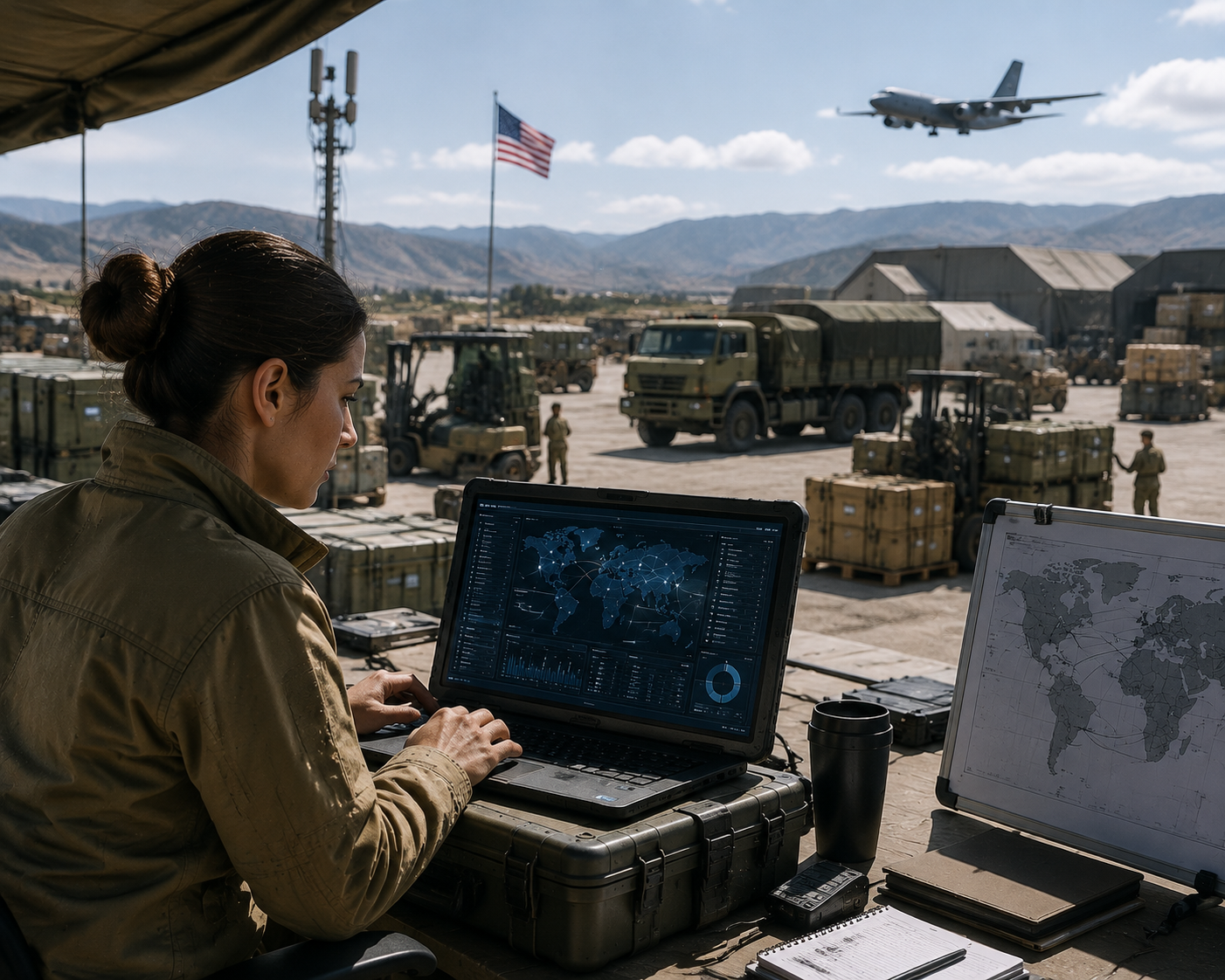
Continuous Asset Visibility: Transforming the Future of Government and Defense Logistics
For government and defense organizations, having accurate visibility into critical assets is not just an operational advantage — it is a requirement for mission success. Equipment, supplies, and resources must be available, accounted for, and ready to support missions whenever and wherever they are needed.
However, many organizations today still rely on traditional inventory systems that provide only periodic snapshots of asset information. These systems often answer questions like, “Where was this asset last recorded?” based on the most recent scan, inspection, or inventory update.
While this information is useful, it creates a significant limitation: the moment an asset moves after that last update, visibility begins to decrease.
In complex operational environments, knowing where an asset was yesterday is not enough. Leaders need to know where assets are now, how they are moving, and whether they are available when mission requirements change. This is where continuous asset visibility creates a fundamental shift.
Instead of relying on periodic counts and manual updates, organizations can move toward a real-time understanding of their physical assets throughout their entire lifecycle. Continuous visibility creates a living digital record that reflects what is happening in the physical world as it happens.
Moving From Inventory Records to Real-Time Awareness
Traditional inventory management often depends on human intervention. Personnel scan items, complete inspections, update records, and reconcile discrepancies after they occur. While these processes have supported logistics operations for decades, they become increasingly challenging as supply chains grow larger, faster, and more complex.
Government and defense organizations manage thousands — and sometimes millions — of assets across warehouses, depots, transportation networks, and operational locations. In these environments, even small gaps in visibility can create significant challenges. An asset may be stored in the wrong location, transferred without accurate documentation, or become difficult to locate when needed. These issues can lead to delays, increased labor requirements, reduced accountability, and uncertainty during critical operations.
Continuous asset visibility changes the model by creating a direct connection between physical assets and digital intelligence. Through technologies such as RFID, sensors, and automated data collection systems, organizations can capture asset movement automatically and transform that information into actionable insight.
Creating a Digital Record of Every Asset Movement
Venatrust helps organizations achieve continuous asset visibility by connecting physical inventory with intelligent tracking systems. Through RFID technology, sensors, and advanced data platforms, Venatrust creates a real-time record of where assets are located, how they move, and how they change throughout their operational lifecycle.
At the foundation of this capability are Venatrust’s multizone RFID readers, which allow organizations to automatically identify assets as they move through different areas of a facility. Rather than requiring every movement to depend on a manual scan, assets can be detected as they pass through designated operational zones. This creates a more complete and accurate understanding of inventory activity while reducing the burden on personnel.
For warehouses, depots, and secure facilities, this means teams can gain greater confidence in their inventory records without relying solely on periodic audits or manual reconciliation. The result is a continuous flow of trusted information that helps organizations understand not only what assets they have, but also where those assets are located and how they are being utilized.
Improving Readiness, Accountability, and Decision-Making
Continuous asset visibility provides benefits across every level of an organization.
For logistics teams, it means equipment can be located faster, inventory discrepancies can be identified sooner, and time spent searching for assets can be significantly reduced.
For operational leaders, it creates greater confidence that mission-critical resources are available, properly tracked, and positioned where they are needed.
For government organizations responsible for accountability and reporting, continuous visibility supports stronger inventory accuracy and improved transparency across complex supply chains.
This capability becomes especially valuable in environments where readiness depends on having the right resources available at the right time. Whether managing defense equipment, humanitarian supplies, or critical government assets, organizations need reliable information to make effective decisions.
When leaders have access to real-time asset intelligence, they can move from reacting to problems after they occur to proactively managing their operations.
The Future of Logistics Is Continuous Awareness
The future of logistics is moving beyond periodic inventory counts and outdated reports. Modern organizations require a stronger connection between the physical world and digital systems — one that provides continuous awareness of what is happening across their entire asset network.
Continuous asset visibility represents a new approach to inventory management. It transforms assets from passive items tracked through occasional updates into intelligent resources with a persistent digital identity and history.
With Venatrust, government and defense organizations can modernize their logistics operations by creating greater transparency, strengthening accountability, and improving operational readiness.
The question is no longer only, “Where was this asset last recorded?” The future of logistics requires the ability to know where assets are now, understand how they are moving, and ensure they are ready when they matter most.
Venatrust provides the technology foundation to make that future possible — connecting physical assets with digital intelligence to create a more visible, secure, and resilient supply chain.
