
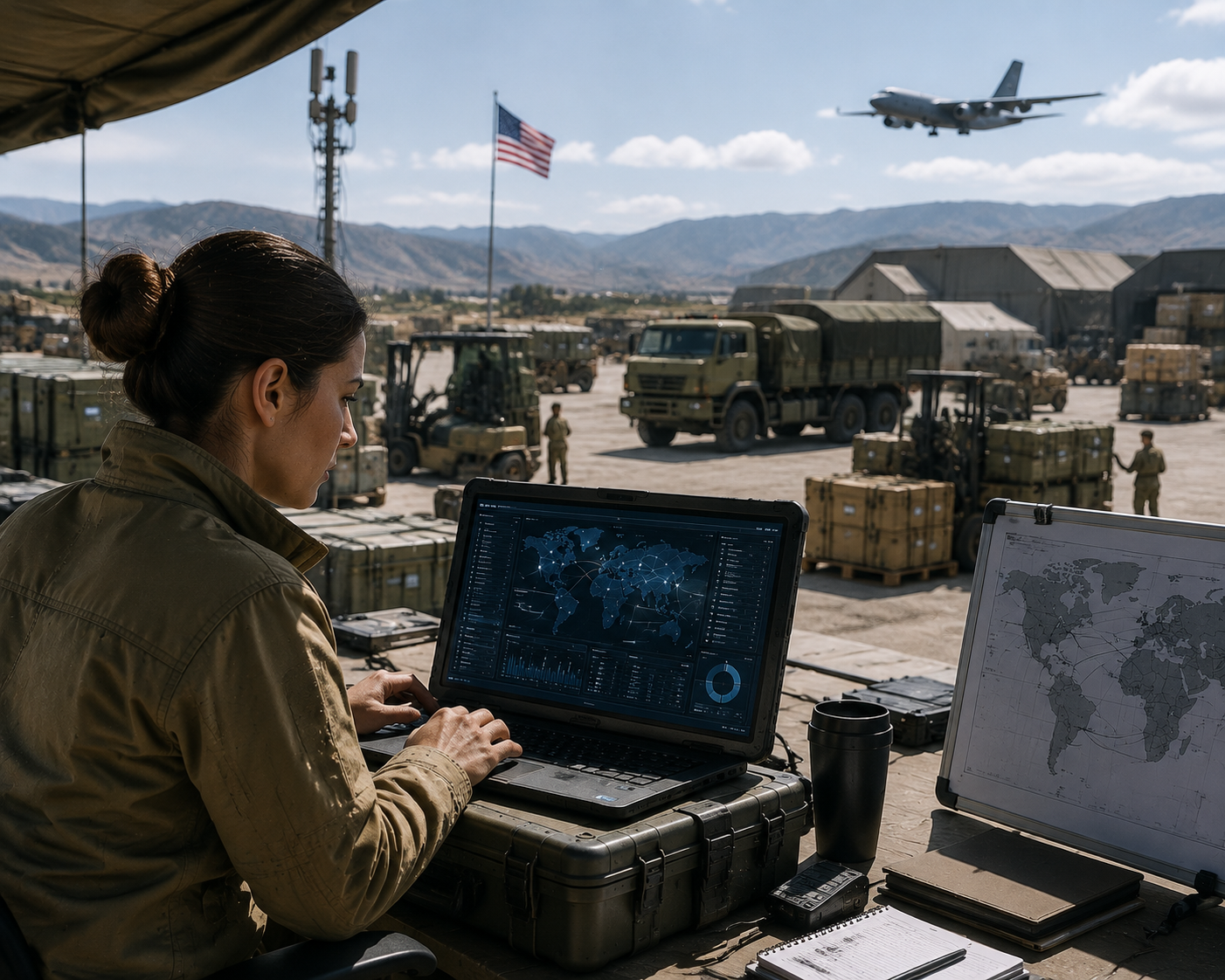
Transforming Government Supply Chains with RFID Technology
Government supply chains are among the most complex logistics networks in the world. Every day, defense organizations and civilian agencies coordinate the movement of millions of assets across thousands of facilities, warehouses, depots, transportation hubs, and operational locations. From military equipment and emergency response supplies to critical infrastructure components and humanitarian aid, these assets must arrive at the right place, at the right time, and in the right condition.
Managing a logistics network of this scale requires far more than simply maintaining an inventory database. It requires continuous awareness of where assets are located, how they are moving, and whether they are available to support changing operational needs. Yet despite advances in digital technology, many government supply chains still depend on manual inventory processes, barcode scanning, spreadsheets, and disconnected software systems. While these methods have served organizations for decades, they were designed for a slower, less dynamic logistics environment.
Today, they often struggle to keep pace with the speed, complexity, and accountability required for modern government operations.
The Limitations of Traditional Inventory Management
Most traditional inventory systems provide only periodic snapshots of information. An asset may be scanned when it arrives at a warehouse, during a scheduled inventory count, or before it leaves for another destination. Between those events, organizations often have limited visibility into where that asset is or what has happened to it. This creates blind spots throughout the supply chain.
An asset may be moved to another storage location without being recorded immediately. Equipment may be delayed during transportation, inventory may be misplaced within a warehouse, or shortages may not be identified until the next manual inventory cycle. These visibility gaps increase labor requirements, reduce inventory accuracy, and slow operational decision-making. Teams spend valuable time searching for equipment, reconciling inventory records, and verifying asset locations instead of focusing on mission execution.
As government logistics operations continue to grow in size and complexity, organizations need a more intelligent way to understand what is happening across their supply chain in real time.
RFID Is Transforming Government Logistics
Radio Frequency Identification (RFID) technology is changing the way government organizations manage inventory by creating automated, real-time visibility into physical assets. Unlike traditional barcode systems, which require an individual item to be manually scanned with a direct line of sight, RFID enables multiple tagged assets to be identified automatically as they move through an environment.
Hundreds of tagged items can be detected simultaneously without requiring personnel to stop, scan, or individually process each asset.
This dramatically increases the speed and accuracy of inventory operations while reducing dependence on manual labor.
Instead of relying on occasional inventory updates, organizations can begin building a continuous understanding of inventory movement throughout the supply chain.
Creating Continuous Visibility Across the Supply Chain
Venatrust extends the value of RFID by combining intelligent software with advanced multizone RFID readers that continuously monitor the movement of assets across warehouses, depots, distribution centers, and secure government facilities.
Rather than creating isolated scan events, Venatrust captures inventory activity automatically as assets move between operational areas. Every movement contributes to a continuously updated digital record that reflects the real-world flow of inventory throughout the organization. This allows logistics teams to quickly understand where assets are located, how they are moving, and where bottlenecks or delays may be developing.
Instead of searching through multiple disconnected systems or waiting for the next inventory count, decision-makers gain access to more current and reliable operational intelligence. The result is a supply chain that is not only more visible but also more responsive.
Improving Accountability and Operational Readiness
Greater visibility leads directly to better operational outcomes.
For logistics personnel, automated RFID tracking reduces the amount of time spent performing manual inventory counts, locating misplaced equipment, and reconciling inventory discrepancies.
For warehouse managers, it creates greater confidence that inventory records accurately reflect what is physically present within the facility.
For leadership, continuous visibility supports faster, more informed decision-making by providing access to current inventory intelligence rather than historical reports.
Government agencies can strengthen accountability by maintaining a more complete record of asset movement throughout the supply chain while improving audit readiness through more accurate and consistent inventory data.
This level of transparency is particularly valuable for organizations responsible for managing high-value equipment, controlled assets, emergency response resources, and mission-critical supplies where every asset matters.
Building the Next Generation of Government Supply Chains
The future of government logistics requires more than periodic inventory updates and manual verification. It requires supply chains that are continuously connected to the physical movement of assets, allowing organizations to understand what is happening in real time rather than reconstructing events after they occur. RFID provides the technological foundation for that transformation.
When combined with intelligent data platforms and automated tracking infrastructure, RFID enables organizations to move beyond reactive inventory management toward proactive operational awareness. Venatrust is helping government and defense organizations make that transition by delivering RFID-powered inventory intelligence that creates continuous visibility across the entire supply chain.
By connecting physical assets with digital intelligence, agencies can modernize logistics operations, improve operational readiness, strengthen accountability, and create a more resilient supply chain capable of supporting today's increasingly complex missions.
In an environment where timing, accuracy, and accountability are essential, knowing where assets were last recorded is no longer enough.
The future belongs to organizations that can understand what is happening now—and use that insight to make better decisions, faster.
