
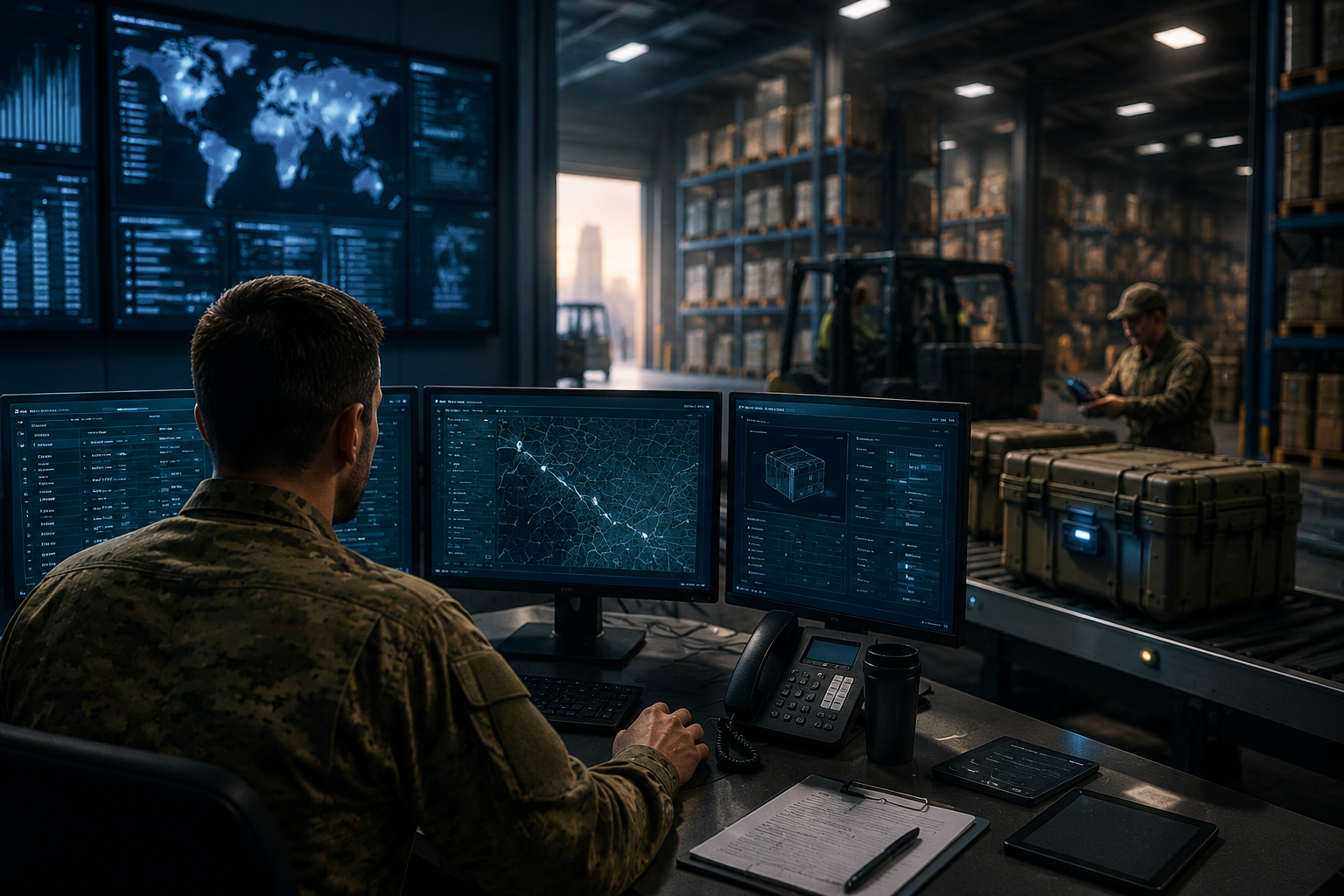
Building a Complete Chain of Custody for Government Assets
For government organizations responsible for managing critical assets, maintaining a complete and accurate chain of custody is essential. Every piece of equipment, supply, and resource represents an investment that supports important missions and operational objectives. Whether managing military equipment through complex supply chains, protecting high-value inventory, or supporting mission-critical operations, leaders need confidence that every asset is accounted for from the moment it enters a system until it reaches its final destination.
However, achieving that level of accountability remains a significant challenge for many organizations. Traditional asset management processes often depend on manual scans, disconnected software systems, spreadsheets, and periodic inventory updates. While these methods can provide snapshots of information, they often fail to provide a continuous understanding of what is happening in the physical environment.
These visibility gaps create operational challenges. Assets may be delayed, misplaced, transferred without accurate documentation, or difficult to locate when they are needed most. In environments where readiness, security, and accountability are critical, even small gaps in tracking can create significant consequences.
Modern government operations require a new approach — one where the movement of every critical asset can be automatically captured, recorded, and understood in real time. Venatrust helps organizations close these visibility gaps by creating an end-to-end digital record of custody across the entire lifecycle of an asset. By combining RFID technology, sensors, and intelligent tracking capabilities, Venatrust connects the physical movement of assets with a digital system of record that provides greater transparency and control.
Instead of relying solely on manual processes or delayed reporting, organizations can gain continuous insight into when assets are received, where they are stored, how they move throughout facilities, and when they change locations or operational status.
At the center of this capability are Venatrust’s multizone RFID readers, which provide automated visibility as assets move through different operational areas. By creating intelligent tracking points throughout warehouses, depots, and secure facilities, organizations can capture movement automatically without requiring every transaction to depend on manual scanning. This allows teams to build a more complete and trusted record of asset activity. Every movement becomes part of a connected digital history — helping organizations understand not only where an asset is located, but also how it arrived there and where it has been throughout its journey. The result is a stronger foundation for accountability, efficiency, and operational confidence.
For government and defense organizations, continuous chain-of-custody visibility can support improved audit readiness, greater inventory accuracy, and faster decision-making. Leaders no longer have to rely solely on outdated reports or time-consuming inventory searches. Instead, they can access more current information that reflects the real-world status of their assets. This shift is especially important as government organizations face increasing demands for transparency, security, and operational efficiency. Managing critical resources requires more than knowing what assets exist — it requires knowing where they are, who has interacted with them, and whether they are available when mission requirements change.
The future of chain of custody is not a collection of disconnected checkpoints. It is a continuous, intelligent record that follows assets throughout their entire lifecycle. By connecting physical assets with digital intelligence, Venatrust helps government organizations modernize their logistics operations, strengthen accountability, and create a more secure and resilient approach to asset management.
When every movement matters, organizations need more than occasional visibility. They need confidence that critical resources are visible, protected, and available whenever they are needed most.
